14 Street Foods That Tell You Where You Are
Street food is geography made edible. The food you can buy on the corner tells you everything about the place.
What grows there. What people had time for.
What they needed to carry with them. What they learned from people who came before.
Here are foods that announce their location the moment they arrive at your mouth.
Tacos al pastor from Mexico City

Pork marinated in dried chiles and spices, cooked on a vertical spit called a trompo. Sliced thin and served on small corn tortillas with pineapple.
This dish arrived when Lebanese immigrants came to Mexico and adapted their shawarma technique to local ingredients. Now it’s so Mexican that people forget it’s part Lebanese.
It tastes like immigration and adaptation.
Bánh mì from Vietnam

A French baguette filled with Vietnamese ingredients. Pâté.
Pickled vegetables. Cilantro.
Jalapeño. Vietnamese cold cuts.
This sandwich is the exact meeting point of French colonialism and Vietnamese cooking. It shouldn’t work.
It works completely. You bite into one and you taste history and hunger and two cuisines solving a problem together.
Gelato from Italy

Frozen cream and milk and sugar. Not ice cream.
Gelato. It’s denser than ice cream and colder than ice cream.
The flavor is more intense because there’s less air. The texture is smoother.
In Italy you point at the flavors you want and someone serves you a small scoop or two. You walk through the city eating, tasting the season’s fruit.
Churros from Spain

Fried pastry dough piped into long sticks and dusted with sugar. Served with thick hot chocolate for dipping.
In Spain you eat churros for breakfast or as a late night snack. The outside is crispy.
The inside stays soft. The chocolate is thick enough that you’re almost drinking it.
Falafel from the Middle East

Chickpeas ground with spices and formed into balls and fried until crispy outside and fluffy inside. Served in pita bread with tahini and vegetables.
This is fast food that’s been fast food for centuries. It’s cheap.
It’s filling. It’s completely vegetarian.
In any city with a Middle Eastern population you can find someone’s grandmother’s recipe.
Empanadas from Argentina

Pastry filled with ground beef and onions and spices and baked or fried until golden. Each region has a different filling.
Chicken. Corn.
Cheese. You can carry one in your hand.
You can eat it while walking. In Buenos Aires they’re everywhere and cheap and better than they have any right to be.
Ceviche from Peru

Raw fish cured in lime juice with onions and cilantro and peppers. Served cold with sweet potato and corn.
This is the food of a country with access to incredibly fresh fish. The lime juice cooks the fish without heat.
The result is bright and acidic and tastes like the ocean and the sun at the same time.
Döner kebab from Turkey

Meat cooked on a vertical spit, shaved thin, served in flatbread with vegetables and sauce. This is fast food that came from nowhere and is now everywhere.
In Turkey it’s a national dish. In other countries it’s been adapted and changed and made into something local.
The basic form is recognizable anywhere.
Pani puri from India

A crispy fried sphere filled with potatoes and chickpeas and spices. You fill it with flavored water at the moment of eating.
It’s supposed to burst in your mouth. The flavors are all at once.
Spicy, sour, sweet, savory. This is street food as theater.
This is eating as a performance.
Pastel de nata from Portugal

A custard tart with flaky pastry and a custard filling and cinnamon on top. The pastry is crisp.
The custard is soft. The ratio matters.
In Lisbon they come from bakeries that have been making them the same way for generations. They’re cheap.
They’re eaten with coffee. They taste like afternoon.
Shumai from Hong Kong

Open-topped dumplings filled with pork and shrimp, steamed in bamboo baskets. The pork mixture is soft.
The shrimp adds sweetness. The wrapper is thin enough to see through.
In Hong Kong you go to a dim sum restaurant early in the morning and order these from a cart. They come hot and steaming and small enough to eat in one or two bites.
Satay from Southeast Asia

Meat on a stick marinated and grilled. Served with peanut sauce.
The sauce is spicy and sweet and creamy. The meat is charred on the outside and tender inside.
This is food that was always meant to be eaten by hand. In markets across Thailand and Malaysia and Indonesia people are grilling these at all hours.
Crepes from France

Thin pancakes filled with sweet or savory ingredients. Nutella and banana.
Ham and cheese. Jam and cream.
In Paris you buy them from a cart on the street and eat them while walking. The crepe is meant to be held in paper.
It’s meant to be eaten while doing something else. It’s portable food that tastes like leisure.
Shawarma from Lebanon
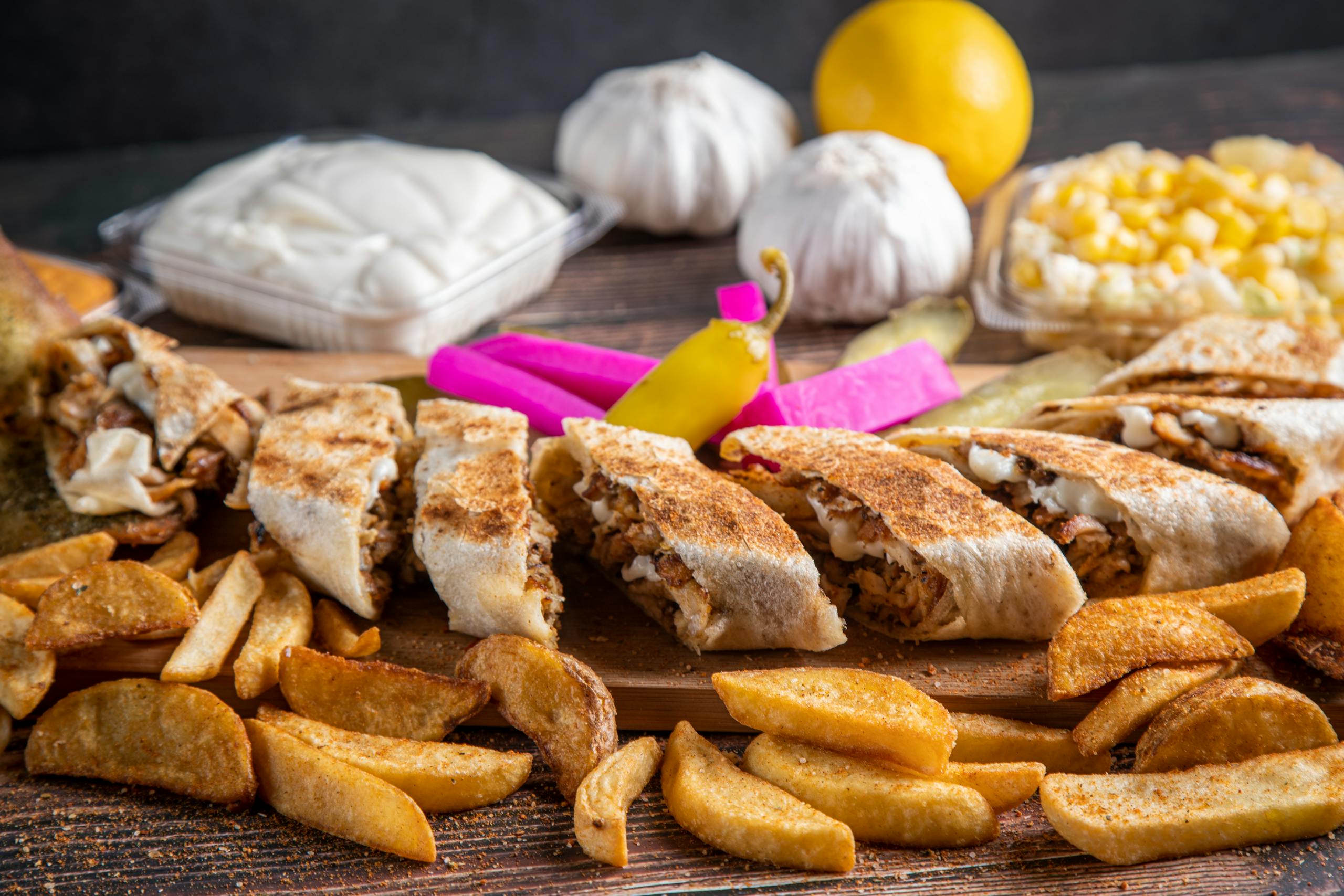
Meat cooked on a vertical spit and shaved thin, served in pita with vegetables and tahini. This is the Middle Eastern version of döner kebab.
It’s been adapted and spread across the world. In every city with Middle Eastern immigrants you’ll find someone making shawarma.
It tastes like home and innovation at the same time.
What these foods share

They all arrived at street level because they solved a problem. People needed to eat fast.
People needed to eat cheap. People needed to eat while working or traveling.
Over time, the solution became the tradition. The street food became the identity of the place.
You taste one and you know where you are. You taste one and you understand something about how people live there.